A Homeowner's Guide to Emergency Tree Removal & Identifying Tree Hazards

The sound is unforgettable. A deep, splintering crack followed by a ground-shaking thud that rattles the windows. When a severe storm passes through Rock Hill, SC, the fear and uncertainty of a fallen tree is a real danger for many homeowners. One moment, you feel safe in your home; the next, you are facing a massive, dangerous problem lying across your yard, your driveway, or even your roof. The immediate questions are overwhelming: Is everyone safe? What do I do now? Who can I call?

This guide is designed to help you act safely and decisively in a tree emergency. It will also help you proactively identify potential hazards before they become disasters. A fallen tree is more than just a logistical problem; it’s a serious safety risk that demands a professional response. Knowing what to look for and what to do can make all the difference in protecting your family and your property. For situations that demand immediate attention, a rapid-response service is critical. Emergency tree removal is a specialized service to safely remove trees that have fallen and pose an immediate threat to property, safety, or access, often after a storm, high winds, or structural failure of the tree itself.

Table of Contents

Land and Lot Clearing

What Qualifies as a True Tree Emergency?

After a storm, it can be difficult to gauge the severity of the situation. A few downed limbs might be a simple cleanup job, but some scenarios require immediate professional help. This section will help you quickly assess your situation and understand when to call for emergency assistance. Acting quickly in these cases is vital for safety.

    • A tree has fallen on your house, garage, or another structure. This is the most obvious tree emergency. The weight of a mature tree can cause significant structural damage, and its instability poses an ongoing threat until it is professionally removed.
    • A tree is completely blocking your driveway or a primary access road. If a fallen tree leaves you or your neighbors trapped, it is a clear emergency. Access for personal and emergency vehicles needs to be restored as quickly as possible.
    • A tree has fallen on or is entangled with live power lines. This is an extremely dangerous situation. Never approach a tree that is touching a power line. The first call you should make is to your local utility company to shut off the power. Afterward, a specialized tree service can handle the removal.
    • The tree is visibly split, cracked, or uprooted and leaning precariously. A tree that is still standing but severely compromised could fall at any moment. If it is leaning toward a home, a power line, or a public area, it presents a critical risk that requires prompt action for a hazardous tree removal.
    • Large, heavy branches have broken and are suspended overhead. These are sometimes called “widow-makers” for a reason. A large branch that has snapped but not fallen is a time bomb. Wind or gravity could bring it down without warning, posing a lethal threat to anyone below.

How Can You Spot a Hazardous Tree Before a Storm Hits?

The best way to handle a tree emergency is to prevent it from happening. Proactive inspection of the trees on your property allows you to spot warning signs and address them before a tree fails. Many of the issues that cause trees to fall during storms are visible long before the bad weather arrives. Taking a walk around your yard to look for these signs is a simple step that can save you a great deal of trouble.

Look for Signs of Disease, Decay, or Death

Is your tree sick or dying? A sick or dying tree lacks the structural integrity to withstand high winds. What might look like a small problem on the surface can indicate a much bigger issue inside the tree.

    • Fungi, like mushrooms, grow at the base or on the trunk. The visible part of a mushroom is the fruiting body of a much larger fungal network. Its presence on a tree is a strong indicator of internal rot and decay.
    • Deep cracks, cavities, or hollows in the trunk or major limbs. These are physical wounds that compromise the tree’s strength. A hollow trunk means the core wood that supports the tree’s weight is gone, making it much more likely to snap.
    • Large sections of peeling bark or bare branches in the canopy during a growing season. A tree’s circulatory system runs just beneath the bark. Peeling bark suggests that a section of the tree is dead. Likewise, if a tree’s canopy has dead, leafless branches when it should be full, it is a sign of poor health.
    • An unusual or sudden lean. While some trees grow with a natural lean, a sudden or increasing lean indicates root failure. The tree’s anchor in the ground is failing, and it is only a matter of time before it comes down completely.

Check for Structural Problems

Does your tree have a weak structure? A tree’s shape and the way its branches grow can make it more susceptible to breaking apart during a storm. Not all trees are created equal in terms of their sturdiness.

    • Branches that grow too close together with tight, V-shaped unions. These connections are weak points. Bark can get trapped between the growing branches, preventing a strong bond from forming. Stronger, U-shaped unions are much more stable.
    • A history of large branches falling. If a tree has a habit of dropping big limbs, it is a clear sign of a structural issue that needs to be assessed by a professional.
    • A top-heavy canopy or an unbalanced shape. A tree that is lopsided or has a dense, heavy canopy on a thin trunk can be easily caught by the wind, creating a “sailing” effect that can lead to it snapping or uprooting. The tree techs of Rock Hill have seen this many times.

Inspect the Roots and Ground

Are the tree’s roots compromised? The root system is a tree’s foundation. Any damage to the roots can destabilize the entire tree, even if the trunk and branches look healthy.

    • Soil heaving or cracking around the base of the tree. This is a red alert for root failure. It means the tree is starting to pull its roots out of the ground as it leans, and a complete collapse could be imminent.
    • Visible damage to major roots from construction or excavation. If you have recently had work done on your property, check your trees. Severing even one major anchor root can seriously weaken a tree’s stability, though the effects may not be visible for months or even years.
Land and Lot Clearing

What Are the First 5 Steps to Take After a Tree Falls on Your Property?

Witnessing a tree fall on your property is a stressful event. In the moments that follow, it is important to stay calm and follow a clear set of steps to keep everyone safe and begin the recovery process. This is a clear guide for a high-stress situation.

    1. Prioritize Safety. Before you do anything else, confirm that everyone in your home is safe and accounted for. If the tree has hit your house, evacuate the area immediately. Do not re-enter until the structure has been deemed safe.
    2. Report Downed Power Lines. If any part of the fallen tree is touching utility lines, keep a significant distance. Assume every line is live and dangerous. Call your electric company and 911 right away. This is the most critical first step.
    3. Call a 24/7 Emergency Tree Removal Service. A fallen tree is not a do-it-yourself project. It contains immense stored energy and can shift or roll unpredictably during cutting. Professionals have the training and equipment for safe tree removal. A local company like Niwaki Tree can respond quickly to secure the site.
    4. Document Everything. Once the area is safe, take photos and videos of the damage from multiple angles. Get wide shots of the entire scene and close-ups of specific points of impact on your home or property. This documentation will be essential for your insurance claim.
    5. Contact Your Homeowner’s Insurance Agent. Inform your insurance company of the situation as soon as possible. They will walk you through the claims process and explain what your policy covers.

Why Is DIY Emergency Tree Removal a Bad Idea?

When faced with a fallen tree, some homeowners might be tempted to grab a chainsaw and handle it themselves to save money. This is a dangerous choice that can lead to serious injury or additional property damage.

    • Hidden Dangers: A fallen tree is not just a log. Its weight is distributed unevenly, creating immense tension and compression points. A wrong cut can cause the trunk to snap up, drop down, or roll with incredible force.
    • Electrocution Risk: Power lines can be difficult to see when they are tangled in branches and leaves. A single touch from a metal chainsaw or even a damp piece of wood can be fatal.
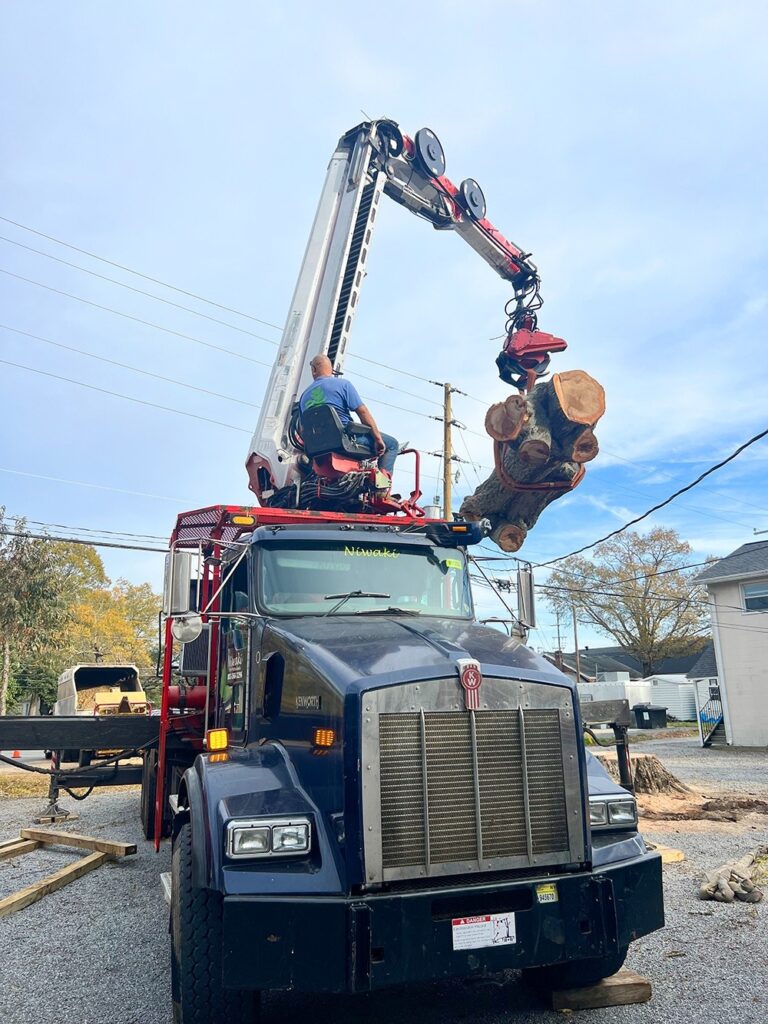
    • Lack of Proper Equipment: A professional safety tree service uses cranes, rigging, block-and-tackle systems, and advanced safety gear to dismantle a fallen tree in a controlled manner. A homeowner’s chainsaw is no match for this complex work.
    • Risk of Causing More Damage: Attempting to cut up a tree resting on your roof can cause it to shift, leading to more structural damage. Proper removal requires lifting the weight off the structure, not just cutting it into pieces. When you need help, you can

Things You Might Be Wondering

Here are answers to some of the most common questions homeowners have about tree emergencies.

How much does emergency tree removal cost?

The expense for an emergency removal can vary. Several factors influence the final bill, including the tree’s size and weight, its location on your property, and its accessibility. A tree that has fallen in an open yard will be less complex to remove than one that is tangled with your home’s structure. The need for special equipment, like a crane, will also affect the project’s scope. A professional service will provide a detailed quote after assessing the specific situation.

Does homeowner’s insurance cover fallen tree removal?

In many cases, yes. A standard homeowner’s insurance policy typically covers tree removal if the tree fell due to a covered event, like a windstorm, and damaged a covered structure, such as your house, garage, or fence. Coverage for removing a tree that simply fell in your yard without hitting anything may be more limited. It is always best to read your specific policy or speak directly with your agent to understand what is covered.

How can I prevent future tree emergencies?

Prevention is the best medicine. Conducting annual visual inspections of your trees is a great start. Watering them during periods of drought helps keep them healthy and resilient. Above all, the most effective action is to hire a certified arborist for a professional inspection and routine pruning every 3-5 years. An expert can spot underlying issues you might miss and keep your trees healthy and well-structured for years to come. Explore our full range of tree care services to see how we can help.

cutting down tree 2

Conclusion

A tree emergency can be a frightening experience, but with the right knowledge, you can navigate it safely and effectively. Remember to put safety first, understand the immense value of calling professionals like Niwaki Tree for emergencies, and appreciate the power of proactive maintenance. Don’t wait for a disaster to happen. If you are concerned about a tree on your property in the Rock Hill area, contact our dedicated emergency tree service team today for a professional assessment and peace of mind. Our team at Niwaki Tree has been helping homeowners for over 26 years.

Scroll to Top