Essential Tree Cutting Equipment: Tree Cutting Tools Every Homeowner Should Know
When you’re planning any kind of tree work at home, having the right tree cutting equipment is just as important as having the right plan. The right tools help you make cleaner cuts, protect your property, and most importantly, keep you safe. Niwaki Tree and Shrub works with professional-grade tools every day, and this guide will walk you through the essentials every homeowner should understand before picking up a saw.
Why the Right Tree Cutting Equipment Matters
Cutting branches or taking down even a small tree isn’t like trimming a hedge. Trees are heavy, unpredictable, and under tension. Using the wrong tools—or tools you don’t fully understand—can lead to:
- Injuries from kickback, falling limbs, or slipping ladders
- Damage to your home, fence, or vehicle
- Poor cuts that stress or permanently damage the tree
The goal is simple: work smarter, not harder. Good equipment, used correctly, lets you do light pruning safely and helps you know when to call in professionals like Niwaki Tree and Shrub for the big jobs.
Hand Tools: The Foundation of Tree Care
Before we talk about chainsaws, let’s start with the basic hand tools every homeowner should have.
1. Hand Pruners
Hand pruners (or secateurs) are ideal for small twigs and branches up to about ¾ inch thick. They’re perfect for:
- Trimming small, low branches
- Shaping shrubs and small ornamentals
- Removing dead or diseased tips
Look for bypass-style pruners (two curved blades that pass by each other like scissors). They make cleaner cuts and are gentler on living branches.
2. Loppers
Loppers are essentially long-handled pruners made for thicker branches (usually up to 1–2 inches wide). They give you:
- Extra leverage for thicker branches
- More reach for slightly higher limbs
- Better control than a saw for precise cuts
Use loppers when branches are too thick for hand pruners but don’t yet require a saw.
3. Pruning Saw
A pruning saw is essential for branches too large for loppers. These saws are designed for living wood and often cut on the pull stroke, which gives better control and reduces the chance of binding.
They’re ideal for:
- Removing mid-sized limbs
- Working in tight areas where power tools are risky
- Homeowners who don’t want to use a chainsaw
Chainsaws: Power, Speed, and Serious Responsibility
For many homeowners, chainsaws are the first tool that comes to mind when they think about tree cutting equipment. They’re powerful and efficient—but they must be treated with respect.
Homeowner-Grade Chainsaws
A small to mid-size gas or battery-powered chainsaw can handle:
- Cutting firewood from fallen branches
- Removing small trees
- Bucking (cutting) sections of downed trunks
If you choose to use a chainsaw:
- Read the manual end to end
- Learn proper stance and cutting techniques
- Always wear full safety gear (more on this below)
For a deeper overview of chainsaw safety, you can review reputable resources like this tree care safety guidance.
Pole Saws
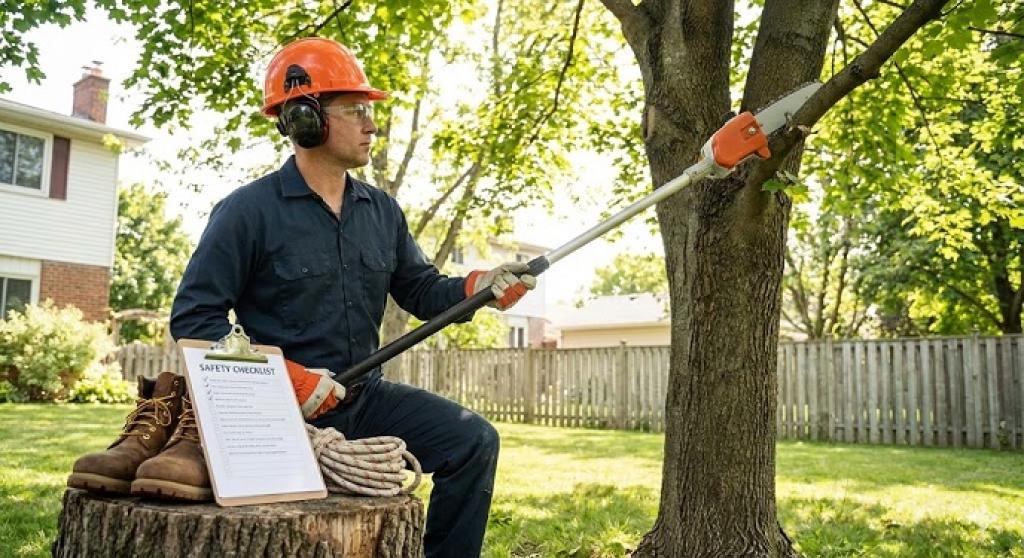
Pole saws are essentially a chainsaw or pruning head on an extendable pole. They help you:
- Reach higher branches without ladders
- Reduce the risk of falls
- Make controlled cuts from the ground
However, they can be top-heavy and tiring to use. Only tackle small branches overhead and never stand directly under the branch you’re cutting.
Essential Safety Gear for Tree Work
No discussion of tree cutting equipment is complete without safety gear. Even if you’re just cutting small branches, protect yourself.
1. Helmet and Eye Protection
Falling branches, sawdust, and wood chips are a constant hazard. At minimum, you should wear:
- A hard hat or forestry helmet
- Safety glasses or a mesh face shield
2. Hearing Protection
Chainsaws and some power tools are loud enough to damage your hearing. Use:
- Over-ear earmuffs
- Or foam earplugs
Many forestry helmets combine head, eye, and hearing protection into one system.
3. Gloves and Protective Clothing
Wear sturdy gloves for grip and protection from splinters. Long sleeves and long pants help protect against small cuts and scrapes.
If you’ll be using a chainsaw, chainsaw chaps are strongly recommended. They’re designed to jam the chain and reduce injury if the saw contacts your leg.
4. Proper Footwear
Always wear closed-toe, non-slip boots—ideally with a reinforced toe and good ankle support. Avoid working in sandals or running shoes.
Support Gear: Ropes, Ladders, and Wedges
Beyond cutting tools, there’s supporting equipment that makes tree work safer and more controlled.
Ropes and Rigging
Even small branches can swing or fall unpredictably. Basic rigging ropes can help you:
- Control the direction of a falling limb
- Lower heavier sections safely
- Keep branches away from roofs, fences, or vehicles
Professional crews like Niwaki Tree and Shrub use specialized rigging systems and knots to manage heavy loads safely. For most homeowners, simple rope assists should be the limit—never rig large limbs or whole trees without training.
Ladders
If you must use a ladder:
- Make sure it’s stable and on level ground
- Never overreach—move the ladder instead
- Avoid using chainsaws from ladders whenever possible
Whenever you feel tempted to climb higher or stretch further, that’s usually your cue to stop and call a professional.
Felling and Splitting Wedges
Wedges are simple but powerful tools that can:
- Help guide the direction of a fall when felling small trees
- Prevent your saw from getting pinched
- Split wood more efficiently after the tree is down
They’re especially useful for firewood processing and basic felling of very small trees in wide-open spaces.
When to Call the Professionals
Having a basic set of tree cutting equipment doesn’t mean you should tackle every job yourself. You should call pros like Niwaki Tree and Shrub if:
- The tree is close to your home, power lines, or a neighbor’s property
- The tree is dead, rotten, or leaning dangerously
- You’re not comfortable using a chainsaw or working at height
- The job requires significant rigging or large branch removal
For more details about professional services and how experts handle complex removals, you can visit your internal services page such as Niwaki Tree and Shrub’s tree removal services.
Final Thoughts: Equip Yourself with Knowledge First
The right tree cutting equipment can make small tree projects safer and more efficient. Start with solid hand tools, add power tools only when you’re ready, and never skip safety gear. Just as important, know your limits.
When a project looks too big, too high, or too close to something you care about, it’s time to bring in the experts. Niwaki Tree and Shrub has the training, equipment, and experience to handle tree work safely, so you don’t have to risk your health or your home.