Managing Tree Limbs and Branches: Tree Cutting Tips for Overhanging and Hazardous Branches
If you’ve got low-hanging limbs over your roof, driveway, or fence, you’re probably already looking for tree cutting tips to make things safer. Overgrown and hazardous branches don’t just make your property look messy—they can damage your home, injure someone, or knock out power during a storm. In this guide, Niwaki Tree and Shrub walks you through how to spot risky branches, what you can safely handle yourself, and when it’s time to call in a professional.
Why Overhanging and Hazardous Branches Are a Big Deal
Overhanging branches can cause problems even on a calm, sunny day. When wind, heavy rain, or ice shows up, they become a real risk. Common issues include:
- Branches rubbing against your roof and wearing down shingles
- Limbs dropping on vehicles, sheds, fences, or patios
- Interference with power lines or service drops
- Branches breaking and falling on walkways or play areas
Ignoring these signs can turn a small issue into a big insurance claim. Managing limbs regularly keeps your property safer and your trees healthier.
How to Spot a Hazardous Branch
Before you grab a saw, do a quick visual inspection of the tree. Here’s what to look for:
- Dead or dying branches – No leaves when the rest of the tree is green, brittle twigs, or peeling bark
- Cracks or splits where the branch meets the trunk
- Branches hanging over the house, driveway, or neighbor’s property
- Limbs touching or near power lines (these are always a job for the utility company or a pro)
- Mushrooms or decay near the base of a branch or the trunk
If you see any of these warning signs—especially on large limbs—don’t ignore them. A professional from Niwaki Tree and Shrub can help you decide whether a branch needs pruning, cabling, or full removal.
Safety First: Before You Cut Anything
Tree work looks simple until something goes wrong. Even cutting small limbs can be dangerous if you’re on a ladder with a sharp tool. Keep these safety basics in mind:
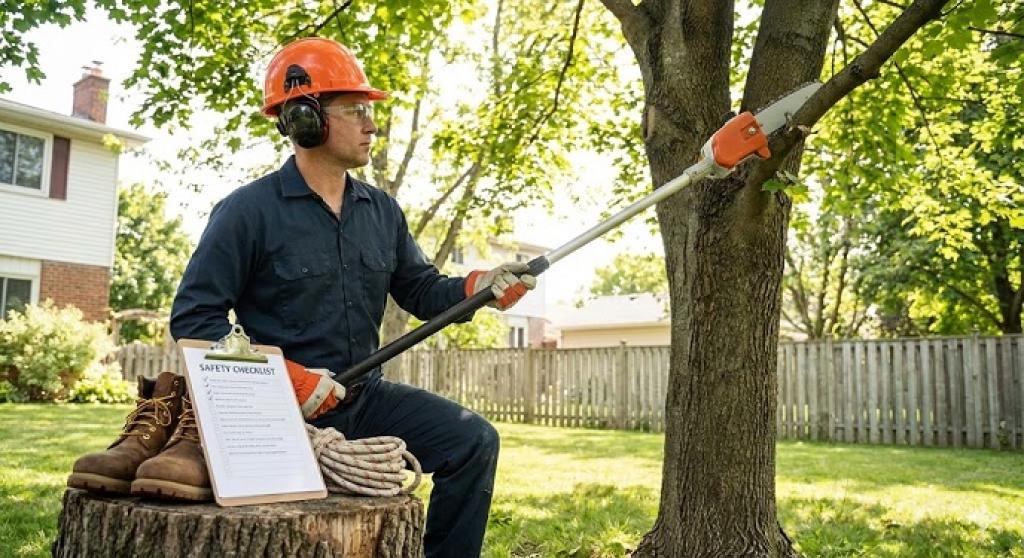
- Wear protective gear: Gloves, safety glasses, helmet or hard hat, and sturdy boots
- Use the right tools: Sharp hand pruners, loppers, or a pruning saw for smaller limbs; never use a chainsaw if you’re not experienced
- Stay off ladders for big limbs: Many serious injuries happen when ladders slip or branches swing unexpectedly
- Never work near power lines: If a branch is within 10 feet of a line, call your utility company or a certified arborist
For more detailed safety best practices, you can review the International Society of Arboriculture’s homeowner resources at their website.
Smart Tree Cutting Tips for Small Overhanging Branches
If the branches are small, low, and easy to reach from the ground, you may be able to handle them yourself. Use these techniques:
- Use the three-cut method for heavier branches
Cutting a limb from the top in one go can cause it to tear and strip bark down the trunk. Instead:- Make a small undercut 6–12 inches from the trunk.
- Make a second cut from the top a bit farther out to remove most of the branch.
- Finish with a final cut just outside the branch collar (the slightly swollen area where the branch meets the trunk).
- Never cut flush with the trunk
Cutting into the trunk or branch collar slows healing and invites disease. Always leave the natural collar intact. - Avoid “lion-tailing”
Don’t strip all the inner branches and leave only foliage at the ends. This makes limbs weaker and more likely to break. - Don’t cut more than 25% of the tree’s canopy at once
Removing too much at one time can stress the tree and affect its health.
Handling Overhanging Branches Near Structures
Branches over your roof, garage, or deck need extra care. Here’s how to approach them:
- Start with what’s easy and safe – Trim small twigs and light branches you can reach from the ground using a pole pruner.
- Watch the fall path – Plan where the branch will land. Clear vehicles, furniture, and anything that could be damaged.
- Use ropes for control (if you’re experienced) – Larger limbs may need to be lowered with ropes, but this is often best left to the pros.
- When in doubt, don’t DIY – If you’re not 100% sure where the branch will fall, or you’d be working over your head or on a ladder, call a professional crew.
For homeowners looking to keep their yard safe and tidy year-round, it’s smart to schedule regular trimming with a trusted company. You can learn more about our local services on our tree trimming and pruning page.
Overhanging Branches and Property Lines
Another common headache: branches hanging over fences or into a neighbor’s yard. A few practical tips:
- Know your rights and responsibilities – In many areas, you can trim branches that cross onto your property line, but you must not damage or kill the tree.
- Talk to your neighbor first – A friendly conversation can prevent misunderstandings and future arguments.
- Avoid major pruning on shared trees – If a large limb or tree is shared along a boundary, it’s safer to bring in a certified arborist to advise both sides.
If a branch looks dangerous or is already breaking, involve a professional quickly so you can document the situation and protect yourself from liability.
When It’s Time to Call the Pros
Some jobs look like a weekend DIY but are actually complex and risky. Call Niwaki Tree and Shrub if:
- The branch is large or heavy
- The tree is close to your house, power lines, or a neighbor’s property
- You see signs of decay, cracks, or disease
- You’d need to climb, use a chainsaw off the ground, or work on a steep slope
Professional arborists have the training, gear, and insurance to manage risky cuts safely. They can also improve the tree’s long-term structure instead of just “hacking” off limbs.
How Niwaki Tree and Shrub Can Help
At Niwaki Tree and Shrub, we specialize in safely managing overhanging and hazardous branches around homes, driveways, and outdoor living spaces. Our team can:
- Inspect your trees and identify weak or dangerous limbs
- Remove overhanging branches before they cause damage
- Shape and prune trees to grow safely away from structures
- Provide ongoing trimming plans so issues don’t build up over time
If you’re staring at a branch and thinking, “If that comes down in a storm, I’m in trouble,” that’s your sign to get it checked out. A quick visit today can prevent a costly problem tomorrow.
Final Thoughts
Managing tree limbs and branches isn’t just about looks—it’s about safety, property protection, and tree health. With the right tree cutting tips, you can handle small, low-risk branches on your own and know when a job is better handled by a professional crew like Niwaki Tree and Shrub.
If you’re unsure whether a branch is truly hazardous or you’re worried about a limb over your home, don’t wait for the next big storm. Reach out to a trusted local tree service, get a professional eye on it, and protect the place you call home.